
The Best Fluffy Pancakes recipe you will fall in love with. Full of tips and tricks to help you make the best pancakes.


A refreshing frozen dessert with thin noodles and rosewater flavor.
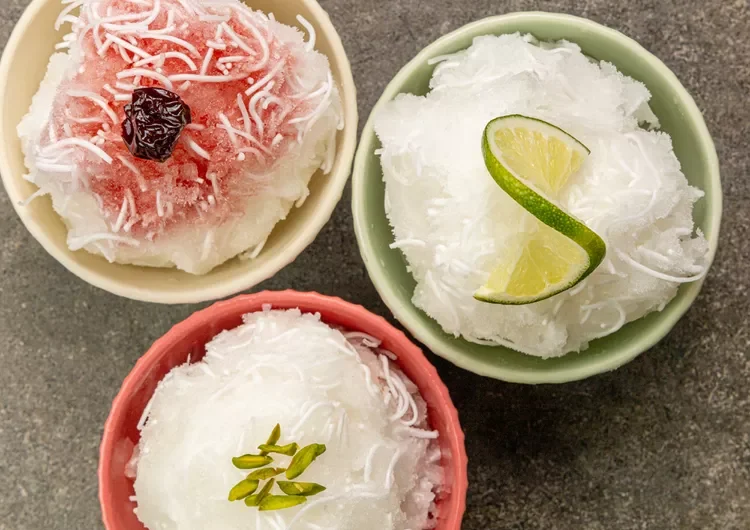
Fāloodeh (Persian Frozen Noodle and Rose Water Sorbet)
Course: DessertCuisine: PersianDifficulty: EasyServings
5
servingsPrep time
30
minutesCooking time
10
minutesCalories
248
kcalIngredients
2 cups (400g) sugar
2 1/2 cups (600 g) water
1/2 cup (165 g) light corn syrup
1/2 cup (120g) rose water
One 1- to 2-ounce (30 to 55 g) bundle of dry mung bean noodles (see notes)
Fresh lime juice, for serving
Sour cherry syrup, for serving
Directions
- In a medium saucepan, heat sugar and 2 1/2 cups water over medium-low, stirring, until sugar is dissolved, 2 to 3 minutes; remove from heat and stir in corn syrup. Alternatively, in a medium bowl, stir sugar with 2 1/2 cups cold water and let stand, stirring occasionally, until sugar is dissolved, 10-15 minutes. (You can use either method to make the syrup; heat will dissolve the sugar faster but take longer to cool down, while the no-heat method will take longer to dissolve the sugar but will chill faster in Step 2.)
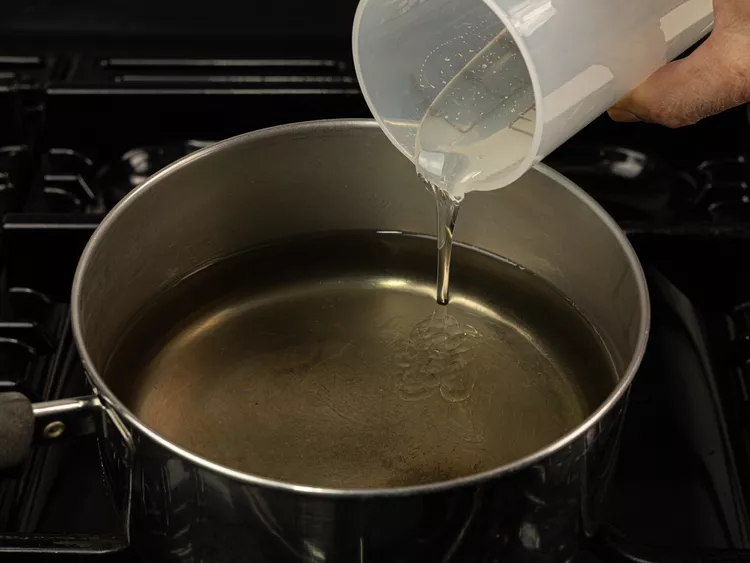
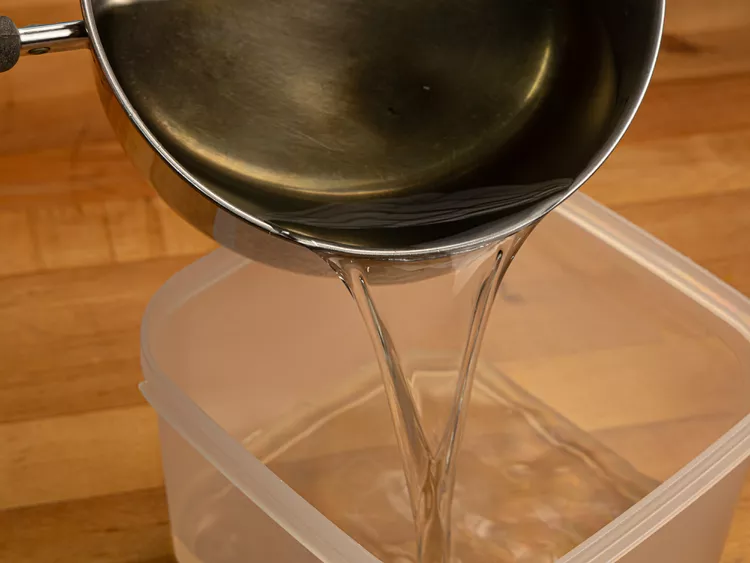
- Pour sugar syrup into a shallow container and cover. If using an ice cream maker, refrigerate until the syrup’s temperature drops below 50°F (10°C), at least 4 hours; if not using an ice-cream maker, transfer to the freezer, then follow instructions in the notes section below.
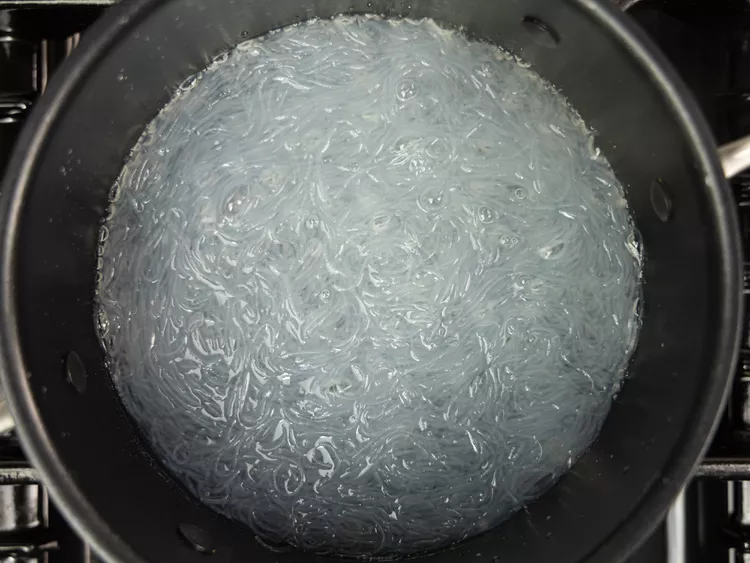
- Meanwhile, in a small saucepan, combine noodles with enough water to cover. Bring to a boil over medium-high heat and cook for 5 minutes.
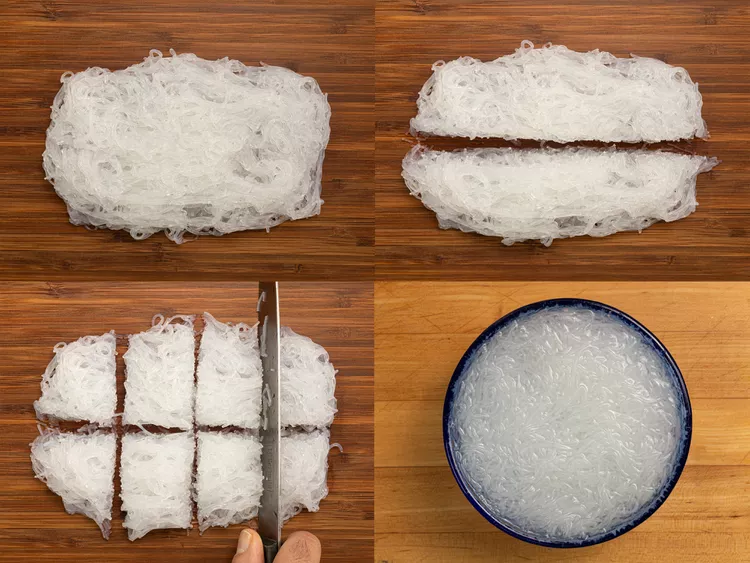
- Drain the cooked noodles in a fine mesh strainer, then transfer them to a cutting board. Form noodles into a rough 3- by 6-inch rectangular pile. Using a large knife or kitchen scissors, cut the pile of noodles into 8 sections, making 1 lengthwise cut and 3 crosswise cuts (the cut noodle strands should be no longer than 2 to 3 inches). Measure the noodles; if you have more than 1 1/4 cups (250g), discard the extra or reserve for another use. Refrigerate the cut cooked noodles in a bowl of cold tap water, covered, until needed. Put an empty, shallow 2-quart container (such as a large tupperware or small baking dish) in the freezer and let chill.
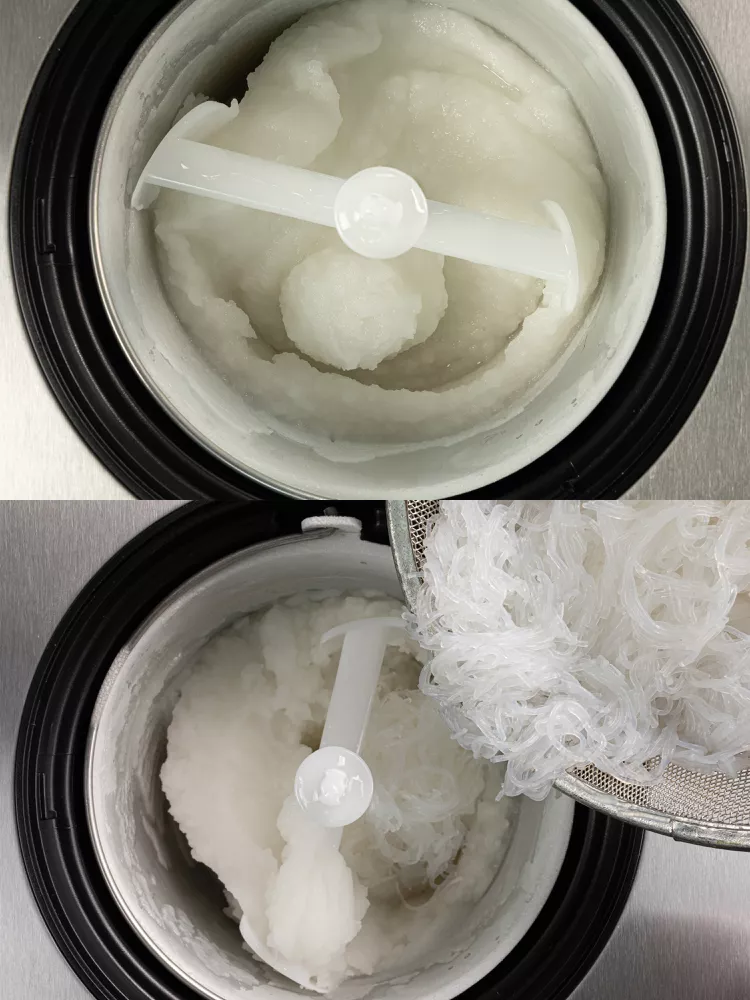
- When the sugar syrup is below 50°F (10°C), stir in the rose water. Using an ice cream maker and following manufacturer’s instructions, churn syrup until the mixture has turned into a thick, white, slushy mass (for making without an ice cream maker, see notes below). Toward the end of the churning process, drain the chilled noodles in a fine-mesh strainer, shaking the strainer to remove as much water as possible, then add about a quarter of the noodles to the freezer bowl and let the ice cream maker churn for another 5 minutes; if your ice cream maker is still churning smoothly, add another quarter of the noodles followed by another 5 minutes of churning before noodles start to clog up. At that point, stop the ice-cream maker. Gently remove the paddle, scraping any attached slush and noodles back into the ice cream maker.
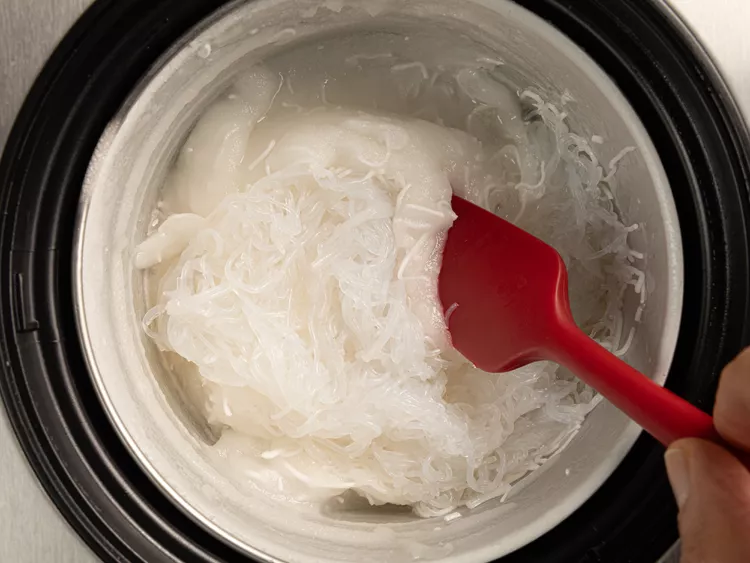
- Add the rest of the noodles into the ice cream maker and, using a silicone spatula, gently mix in the noodles until evenly incorporated, being careful not to break the noodles into tiny pieces.
- Working quickly, scrape the mixture into the pre-chilled container, cover, and return to the freezer. Freeze for 30 minutes, then remove from freezer and, using a silicone spatula, stir the contents with a folding motion. Return to freezer, then continue stirring every 30 minutes until the mixture has the consistency of easily scoopable sorbet; how long this takes will depend on how thoroughly your ice cream maker was able to freeze the syrup; in our tests using a Cuisinart canister-model (non-compressor) ice-cream maker, it took about 2 additional hours of freezer time after churning to freeze firmly enough for serving.
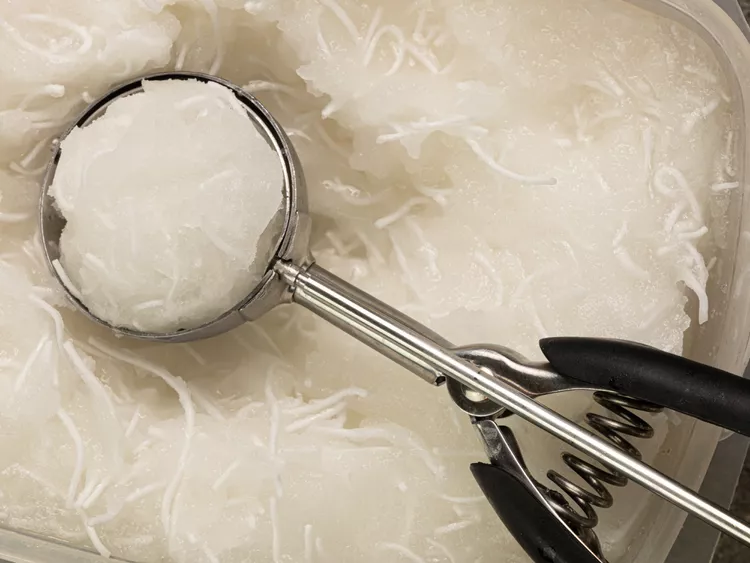
- Scoop into serving bowls and serve with lime juice or sour cherry syrup (or both), allowing diners to garnish their bowls as desired.
Notes
- To make fāloodeh without an ice cream maker: Make the sugar syrup as directed in the recipe. In Step 2, place the sugar syrup along with the rose water in a shallow 2-quart container. Cover, transfer to freezer, and let it chill until ice crystals have begun to form, about 4 hours. While sugar syrup is chilling, cook the noodles as directed in steps 3 and 4. Once ice crystals have started to form, add the noodles to the chilled sugar syrup and stir to combine. Cover container and return to freezer for 30 minutes. Remove container from freezer and stir sugar syrup mixture, making sure to scrape the bottom and the corners of the container. Repeat freezing and stirring every 30 minutes until there isn’t any clear liquid left and you have a thick, white, slushy mass. A spoon scraped across the top should leave an impression that does not disappear right away. Depending on the temperature and the contents of your freezer, you may have to do this over several hours. Serve as directed.
- Unlike with ice cream, it is okay to refreeze fāloodeh.
- For storing fāloodeh, I prefer high-quality airtight plastic containers over glass or ceramic ones. In a glass or ceramic container, fāloodeh takes longer both to freeze and to thaw to the proper consistency. Choose a container with a high surface-area-to-volume ratio, i.e., wider and flatter than a typical supermarket ice cream tub.
- Most mung bean noodles come in 1- to 2-ounce (30g to 50g) bundles, with eight to 10 bundles in each package. I’ve found that different brands work equally well so my advice is to use the thinnest ones you can find. There’s a good chance that your local supermarket carries them in the international aisle; if not, you can find them at all Asian grocery stores.There is no need to unwrap the single strand of the noodle that sometimes is wrapped around the bundle before cooking the noodles; it will unwrap itself on its own as the water heats up.