
The Best Fluffy Pancakes recipe you will fall in love with. Full of tips and tricks to help you make the best pancakes.


This creamy rice pudding is flavored with saffron and rosewater and topped with pretty, royal-style decorations.

Sholeh-Zard (Persian Saffron Rice Pudding)
Course: DessertDifficulty: EasyServings
5
servingsPrep time
10
minutesCooking time
55
minutesCalories
350
kcalIngredients
1/3 cup slivered blanched almonds (1.4 ounces; 40 g); see notes
1/2 cup (118 ml) rosewater
1/2 teaspoon (1 g) saffron (see notes)
3 tablespoons (45 ml) hot water
2 cups short-grain or medium-grain rice (13.5 ounces; 380 g)
3 cups granulated sugar (21 ounces; 600 g) (see notes)
3 1/2 tablespoons unsalted butter (50 g)
- For Garnishing (any one or a combination):
Ground cinnamon
Pistachio slivers
Almond slivers
Crushed dried rose petals
Directions
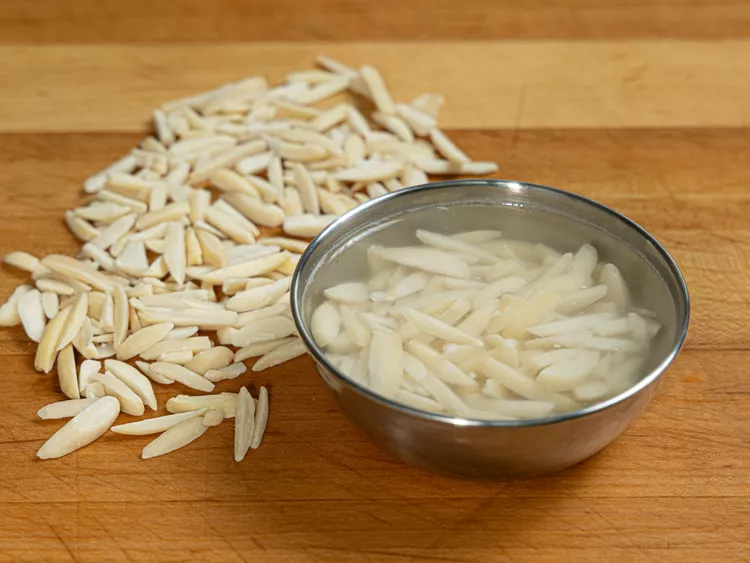
- In a small bowl, soak the slivered almonds in the rosewater; set aside.
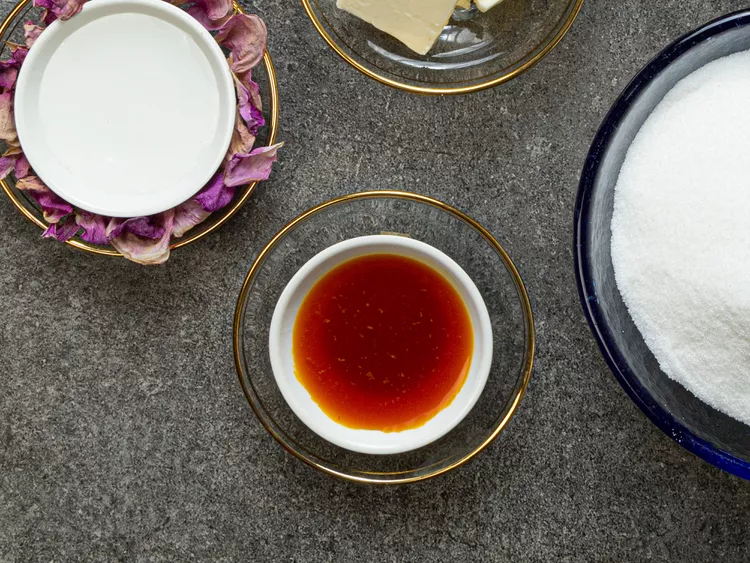
- In a separate small bowl, steep the ground saffron in the 3 tablespoons hot water; set aside.
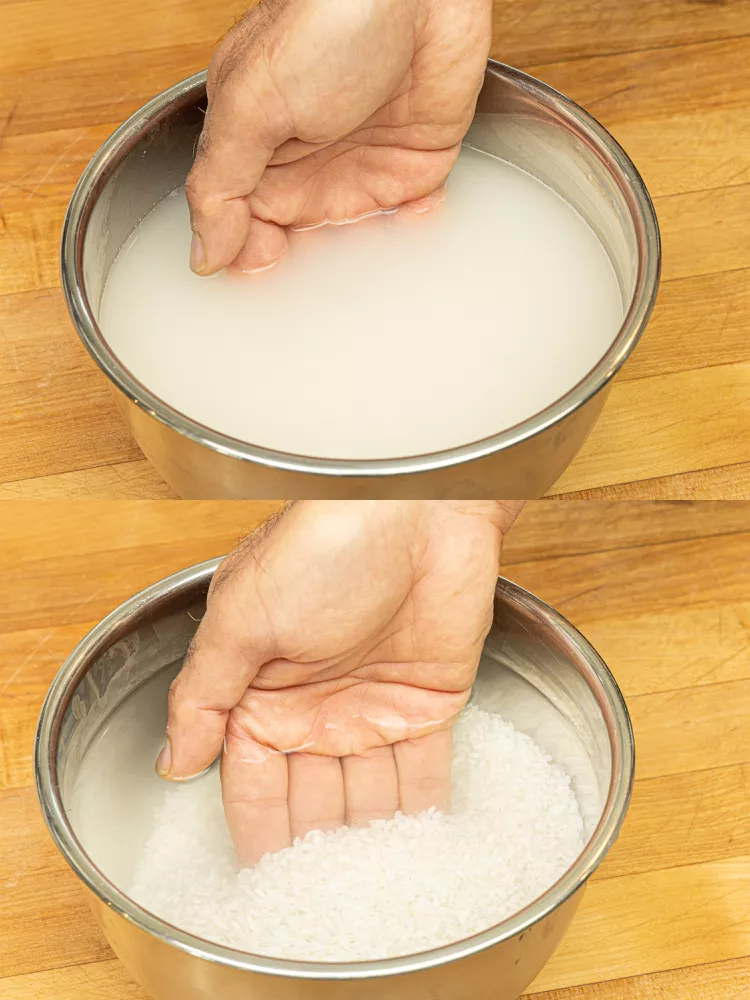
- In a large bowl, combine rice with enough cold water to cover. Using your hand, swirl the rice until the water turns cloudy. Pour off the cloudy water through a fine-mesh strainer, then return the drained rice to the bowl and refill with fresh cold water. Repeat 5 to 6 times until the water runs clear, then drain rice.
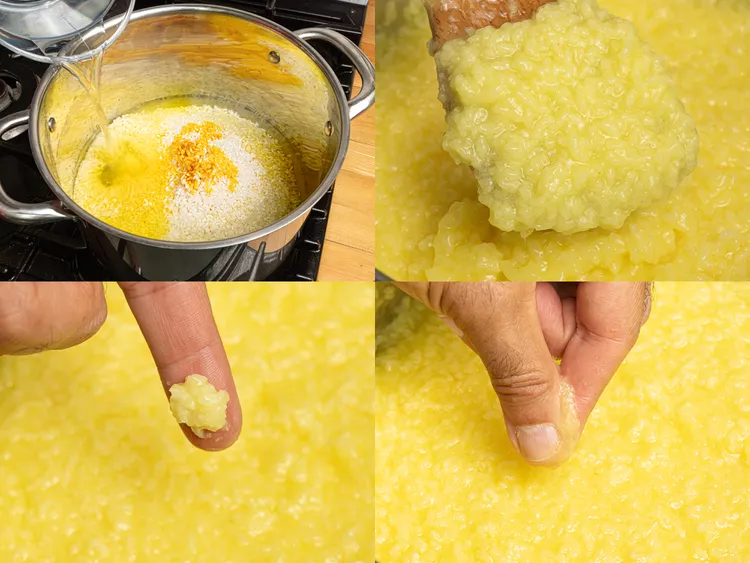
- In a 5- or 6-quart heavy-bottom pot or Dutch oven, combine the washed rice with 1 tablespoon of the steeped saffron mixture and 7 cups (1.7L) water. Bring to a boil over high heat, then lower heat to maintain a gentle simmer and cook, stirring and scraping the bottom of the pot occasionally, until the rice grains are plump and suspended in a thickened slurry roughly the consistency of regular yogurt (not Greek) yogurt, 20 to 25 minutes. (To check for proper consistency, carefully press a couple grains of rice between your fingers: The grains should show no resistance and turn into a sticky paste.) If the mixture is too thick or the grains of rice are not fully cooked, add boiling water in 1/2 cup increments and cook as needed until desired consistency is reached and/or rice is done.
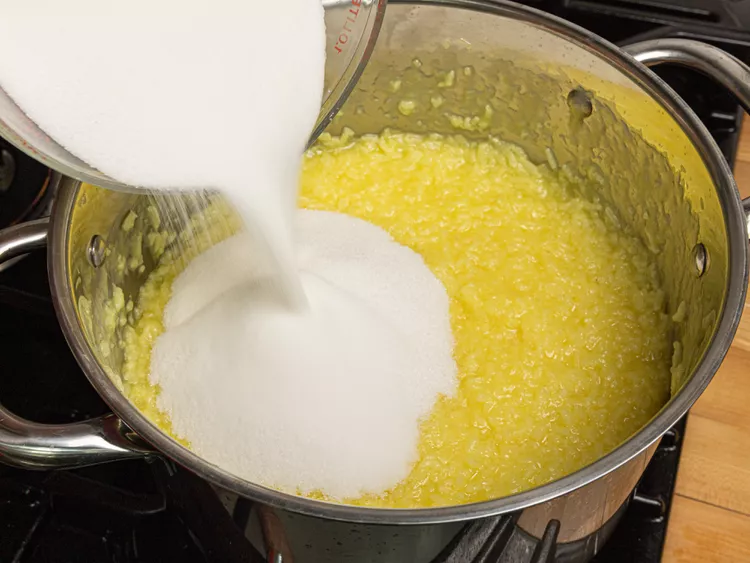
- Add sugar and continue to cook over low heat until the sugar is fully dissolved and pudding is glossy, about 10 minutes.
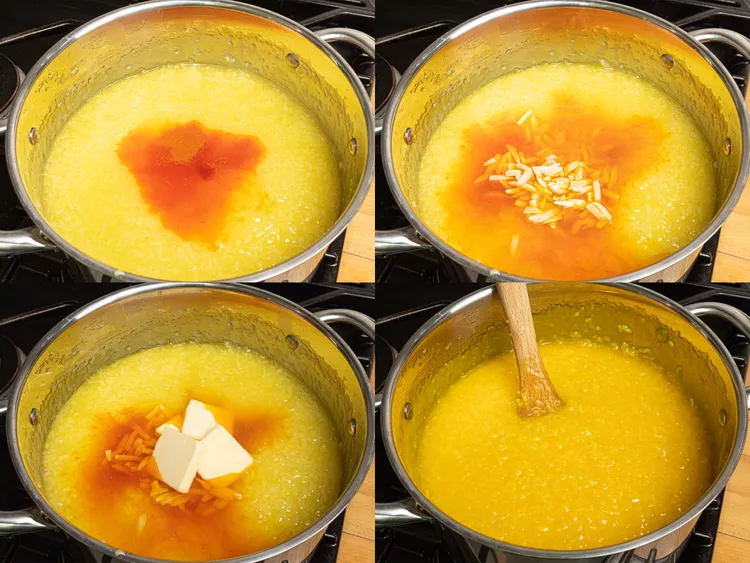
- Stir in the remaining 2 tablespoons of steeped saffron, the soaked almonds with the rosewater, and the 3 1/2 tablespoons butter until the butter is melted and the saffron has fully integrated into the pudding while stirring occasionally, about 10 minutes. Remove the pot from heat, cover, and let rest for 15 minutes.
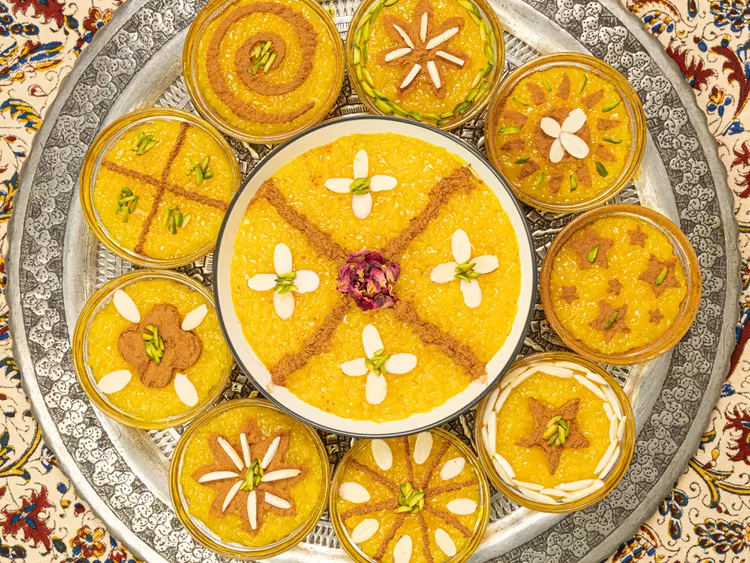
- Ladle pudding into individual serving bowls or into one large shallow and wide serving bowl and let cool to room temperature, 20 to 30 minutes. Decorate the top with ground cinnamon, pistachios, almonds, and/or rose petals into your preferred decorative pattern only once the pudding has cooled and a thin skin has formed on the surface. Serve.
Notes
- This recipe can easily be halved to serve 4 to 6. Reduce each ingredient by half and reduce cooking time in step 4 by 5 to 10 minutes and the cooking time in step 5 by about 5 minutes.
- It is best to grind saffron from threads as needed. Like many spices, saffron retains its flavor better in its whole (thread) form. Store-bought ground or powdered saffron if often dull and stale, or, worse, not a pure product. While you likely don’t have a kitchen scale that can reliably weigh a single gram of saffron, it is often sold by the gram in small containers. If, for example, you had a 2g box of saffron, you would grind half of those threads for this recipe, which is most easily done in a small marble or stone mortar and pestle.
- Feel free to omit the slivered almonds from this recipe for personal preference.
- Persians refer to the resting of the cooked pudding in step 8 as “dam-keshidan.” There is no good English translation for this term. Culinarily speaking, it is something between integrating, steeping, steaming, and resting—all at the same time. It is an ancient technique that is used in the preparation of many Persian rice-centric dishes as well as when making Persian-style tea. For sholeh-zard, its purpose is to allow all the flavors to fully blend together.
- Persians like their sholeh-zard to be very sweet. The amount of sugar specified in the recipe results in a minimum acceptable sweetness level. After you have made it for the first time, taste and adjust the amount of sugar to your preferred level of sweetness.
- The final color of sholeh-zard should be deep bright yellow as illustrated in the pictures in this article. If the color appears too pale, add more steeped saffron, one teaspoon at a time, until desired color is reached.
- Sholeh-zard can be covered and refrigerated for up to 1 week.